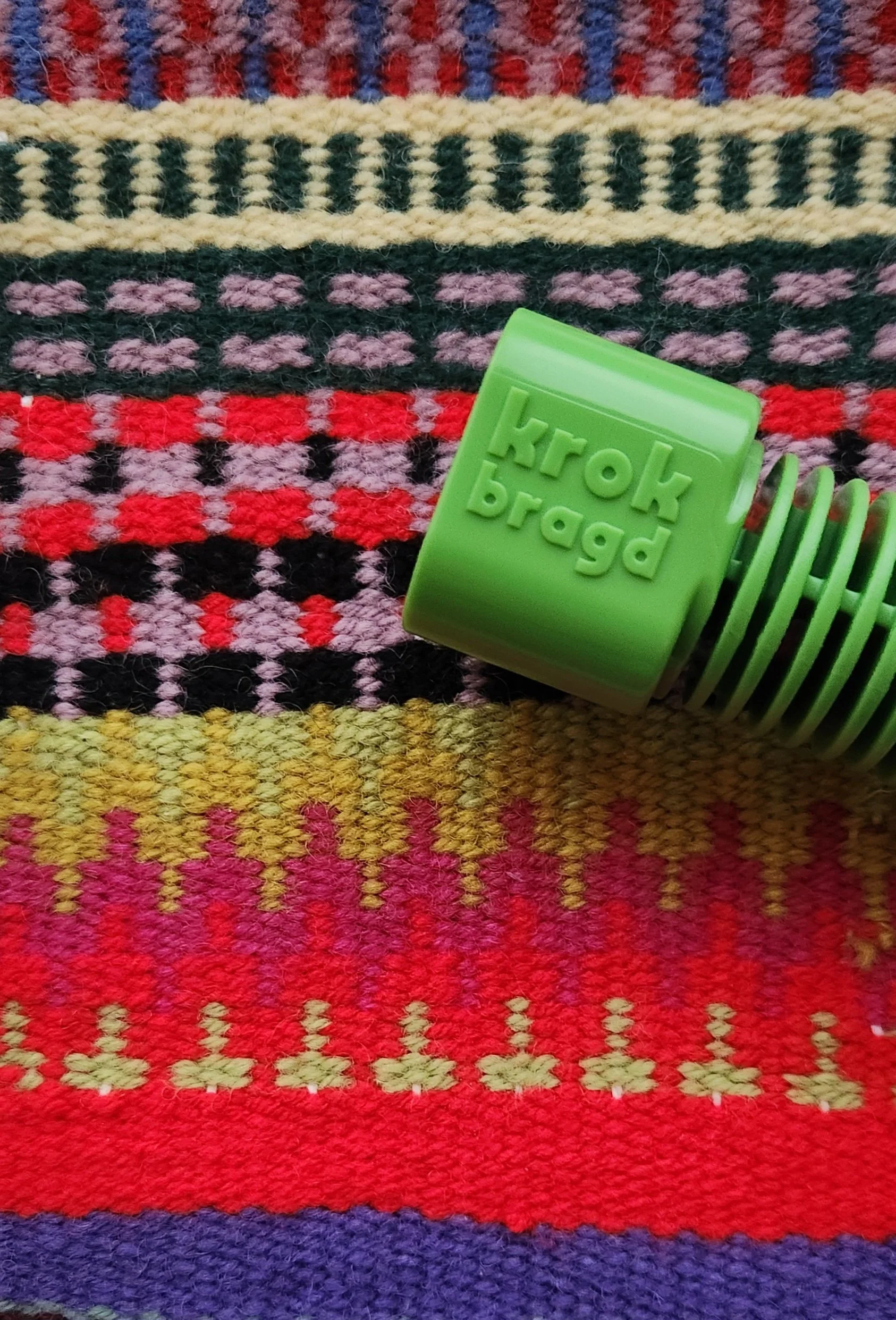
How to weave Krokbragd—the easy (easier!) way
Krokbragd is a bold, densely woven Scandinavian technique known for its rich geometric patterns. Traditionally it takes a multi-shaft loom or rigid heddle and pick-up sticks plus weaving drafts. With the BoomLoom Boss, all you need is the Krokbragd pattern bar.
Krokbragd looks complex, but it's built from a single repeating structure: one patterned row made with three sheds. You rotate the pattern bar forward between each shed, and you create the pattern by varying your colors.
What you'll need
a BoomLoom Boss (either metal or maple works) with the Krokbragd pattern bar. Ideally you will have experience with the other pattern bars and also floating selvedge but if you are good with just diving in I am good with that too
three colors of yarn — worsted or DK weight works well
a thin, strong warp (I like 3/2 or 8/4 cotton)
a tapestry needle or shuttle needle for each color
The basic method
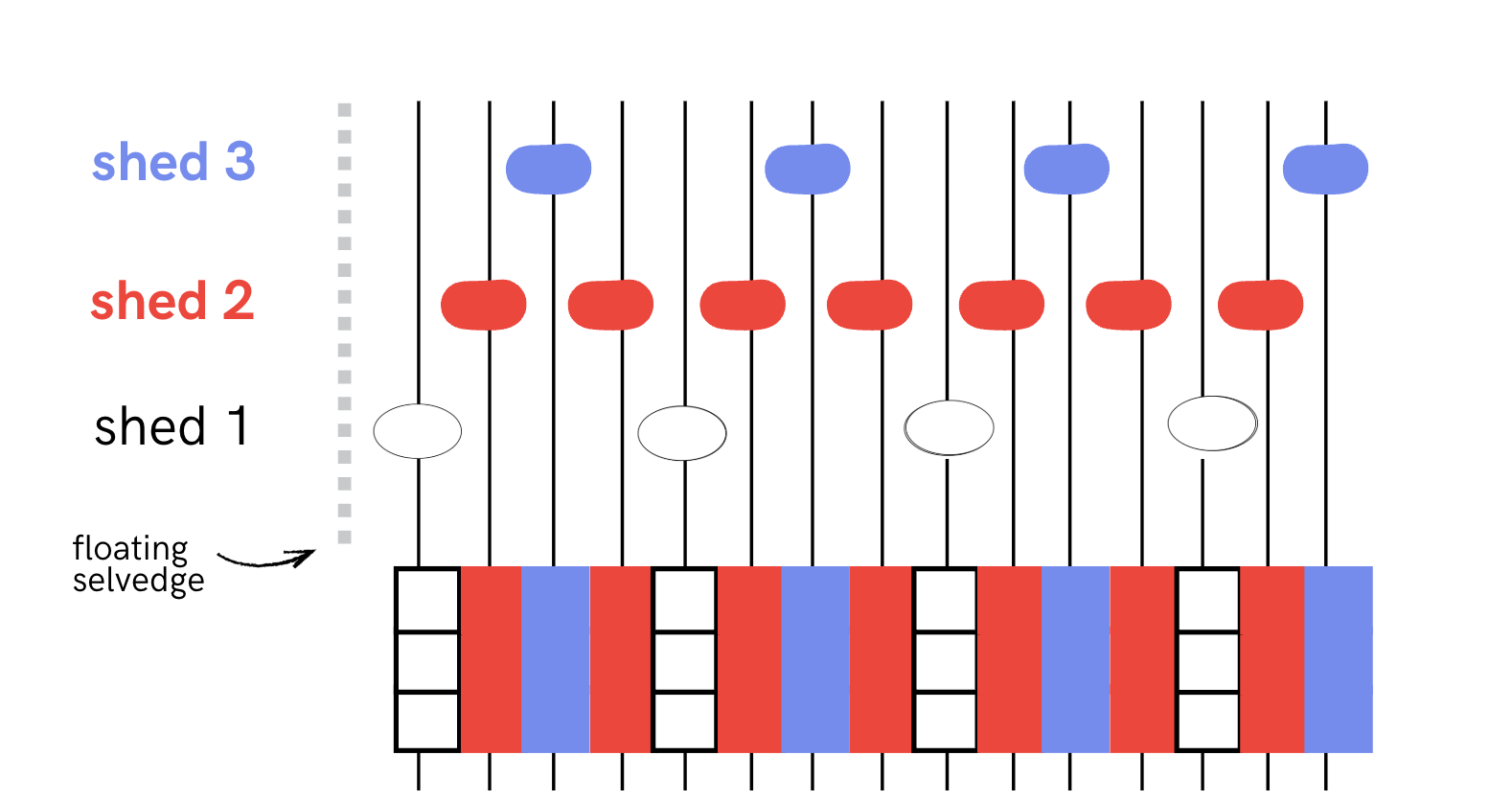
Krokbragd works exactly like the other BoomLoom pattern bars — pass the yarn through the shed to form one row of the pattern, then rotate the bar for the next shed in the pattern. The difference is that krokbragd builds its pattern across three sheds, to make one row. You push down the yarn from all three sheds to form one row. The sheds form a pattern within that row, and then you stack the rows to build a larger design.
Warp your loom and put in the Krokbragd bar.
Weave the first shed of the row in your first color, using a floating selvedge for clean edges (under the first warp thread going in, over the last one coming out).
Rotate the bar forward and weave the second shed — this is where you can change color.
Rotate forward again and weave the third shed using a third color.
Now, repeat the three-shed sequence, but this time change which color goes in which row. You can cycle through the three sheds a few times, switching around the colors, just to get a sense of how the sheds affect the colors and the pattern that builds. By varying which colors appear in which shed, you build krokbragd's characteristic bands, dots, and geometric motifs.
Here’s a diagram that shows you how the sheds add up to a row, and the rows add up to a pattern::
Following patterns
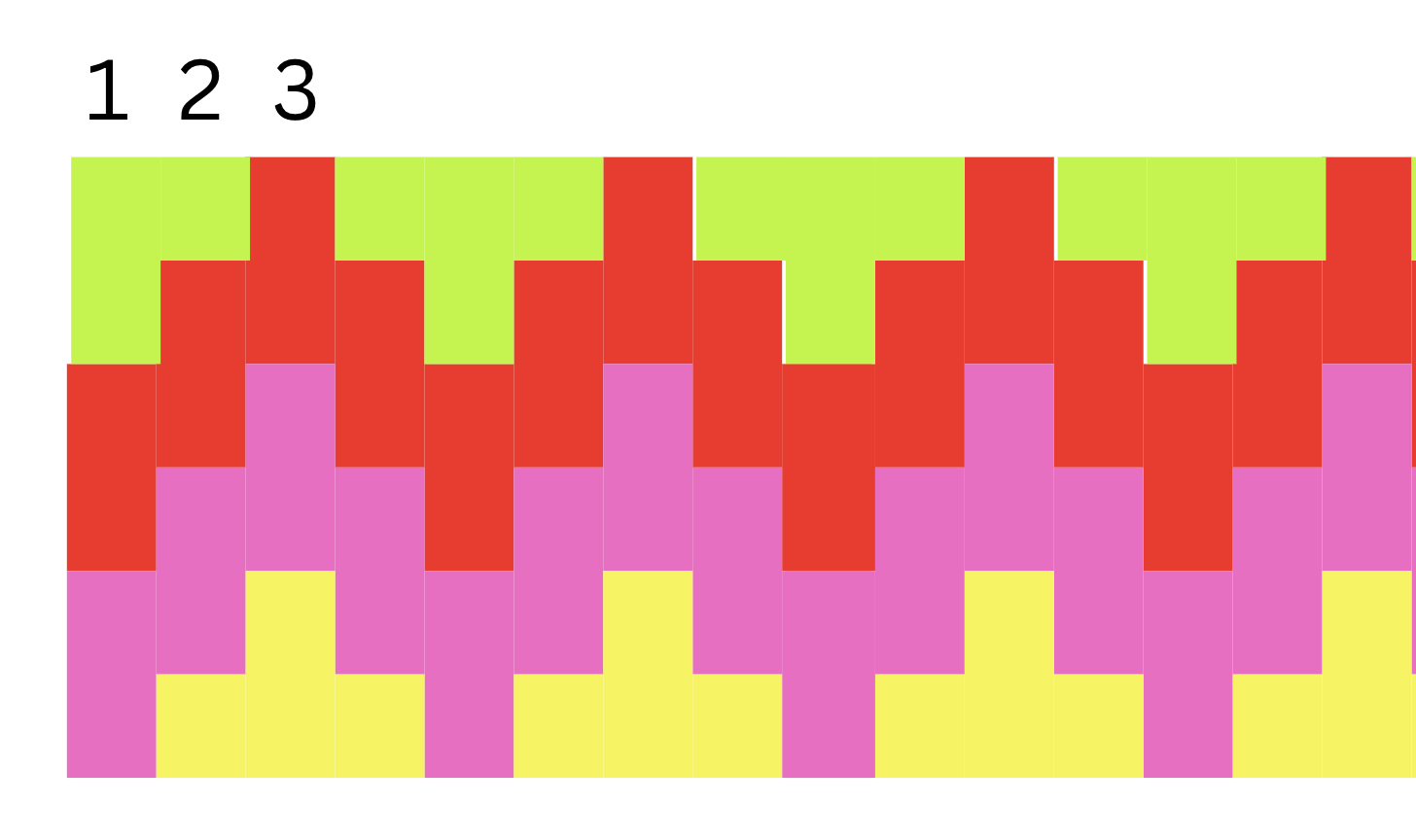
So how do you follow an existing pattern? Here’s a handy rule of thumb: for the patterns made with our bar, the first three warp threads of each row (not including the floating selvedge) correspond to the three sheds, in order. So for example, starting at the bottom of this pattern (since you weave from the bottom up) the sheds would be 1- pink, 2- yellow, 3- yellow:
That will give you the pattern in the bottom section. You could repeat that for a few rows to build up a thick section, and then switch. The next color sequence would be 1 -pink, 2- pink, 3- yellow. If you weave 4 or 5 rows with each color sequence, a pattern like the flame one pictured here will start to form.
One tip: All Krokbragd patterns use the same three sheds woven in a specific order, but that order is not always the same in all patterns. If you’re using our bar to follow a pattern you found in a book, be sure to check that the sheds in that pattern match ours. In our patterns, for example, the second shed is always the one that lifts every other thread. In other patterns, that might be the last or first shed. Debby Greenlaw’s book Krokbragd Patterns uses the same shed order as our bar — and there are thousands of patterns in that book.
Tips
Krokbragd is one of the more advanced patterns, but you don't need to follow a pattern to enjoy it — you can get beautiful results just by playing with color combinations and seeing how the pattern emerges.
Don’t forget your floating selvedge — you can learn more about that in our how-to videos, or in the pattern card info at the bottom of this page.
Because there are no heddles to thread, you can switch to a completely different pattern mid-piece just by swapping the bar.
Watch our krokbragd how-to video below. For a sample project how-to, go to our videos page.